


Whole Home Repiping
Overview
- FREE in-home consultation
- Price: Starting at $600/fixture
- Average time to complete: 2-3 days
What's Included
- Straightforward pricing
- 1-year labor warranty
- 100% satisfaction guarantee
- Flexible financing
Cost of Whole-Home Repiping in Atlanta
- Low: $600/fixture
- Average: $750/fixture
- High: $900/fixture



It's Easy to
Get Started
What Impacts Cost?
The cost to repipe your home will depend on:
- The size of your house. Larger homes will have more fixtures, which means they'll cost more to repipe than smaller ones.
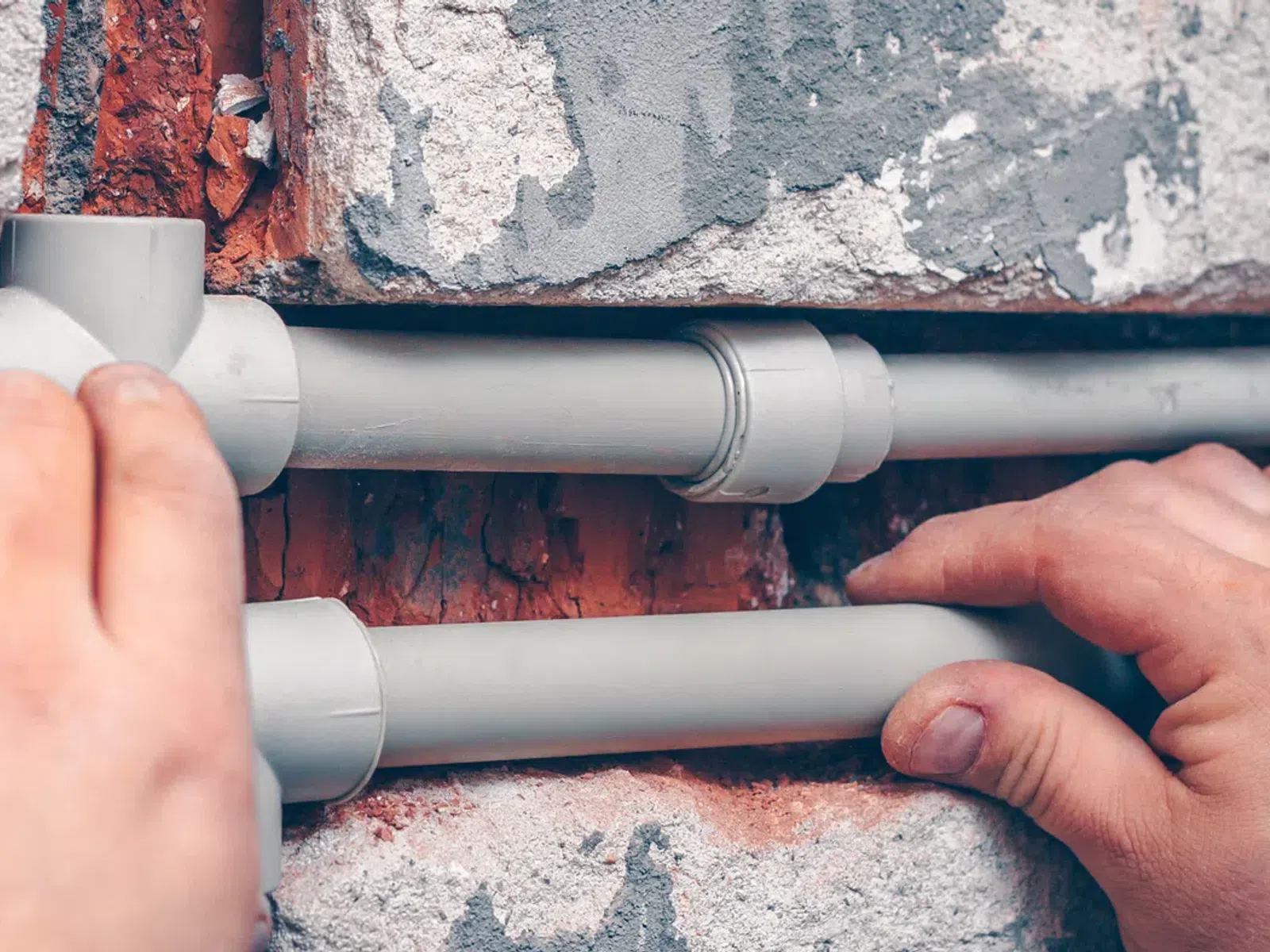
- Pipe material. Metal materials like steel and copper will cost more than CPVC. Your plumber will recommend which material you should install, based on your home and how the pipes will be used.
- Access to plumbing. The easier your plumbing is to access, the lower your repiping cost will be. Your cost will increase if:
- The plumber needs to cut into a lot of walls/ceilings
- You have a slab foundation or a small crawlspace that's hard to navigate
- Local permit fees. Your plumber will likely need a permit from your city to perform a whole-home repiping. The fees to pull the permit will increase your overall cost.
Signs Your Plumbing Needs to Be Repiped
You have low water pressure.
As metal pipes age, they can develop mineral deposits that will thicken over time. These deposits will reduce the size of the passageway, slowing water flow through your fixtures.
You see brown or sediment-filled water.
If you see rust-colored water when using both hot and cold water, your pipes are likely corroding from the inside. When steel pipes reach their age limit, they can start to rust on the inside and will carry that rust through your fixtures. The pipes will then slowly deteriorate until they crack or burst.
Your pipes are corroding.
If your pipes are discolored, flaking, or have divots or bumps on the outside, that's another sign that they're corroding from the inside. If neglected, the pipes will eventually develop leaks and cracks.
You get frequent leaks.
As your plumbing gets older, it suffers wear and tear from the water pressure, forming weak spots in your pipes. This problem will only get worse with time.
Your pipes have reached their "age limit"
- CPVC: 50-70 years
- Galvanized steel: 40-50 years
- Copper: 50 years
- Brass: 40 years
You have lead or polybutylene pipes.
Lead in drinking water can have negative health effects on people (especially children and pregnant women). Polybutylene pipes become brittle over time and will eventually leak or burst, which could cause severe water damage to your house. Polybutylene pipes are normally white or gray and have the letters "PB" printed on them.
Based in Everett, CM Heating proudly serves Snohomish, King, Skagit & Island Counties in Washington.
Check here to see if we service your zip code.
- Allen
- Alger
- Anacortes
- Arlington
- Bellevue
- Bothell
- Bow
- Brier
- Burlington
- Camano Island
- Darrington
- Duvall
- Everett
- Granite Falls
- Kenmore
- Kirkland
- Lake Stevens
- Lynnwood
- Marysville
- Millcreek
- Monroe
- Mount Vernon
- Mountlake Terrace
- Mukilteo
- Redmond
- Sedro Woolley
- Shoreline
- Snohomish
- Stanwood
- Sterling
- Sultan
- Tulalip
- Woodinville
- Woodway